Monday, October 17, 2011

Chapter 15:Retailing;General Motors Cadillac

Cadillac is defined by the concept of art and science. Luxury. Artistry. Advanced technology. Our heritage and mission for the future are clear: the Cadillac brand must be a complete brand. It must encompass every facet and detail of our business as it relates to the consumer. And it must consistently convey a focused, recognizable Cadillac message.
Our updated product portfolio has taken shape. Featuring bold, crisp intersections punctuated by sharply delineated lines, Cadillac vehicle design is rekindling the maverick spirit of Cadillac. Our new image is creating a welcome set of expectations from customers and media alike. Now it is time to integrate the place where Cadillac meets customers face to face – the retail environment. Our retail facilities must not only reflect the Cadillac brand – they must be the Cadillac brand. It is with this in mind that we present to you the new Cadillac Retail Environment for your facility.

Cadillac is one of 6 other retail branches of General Motors.
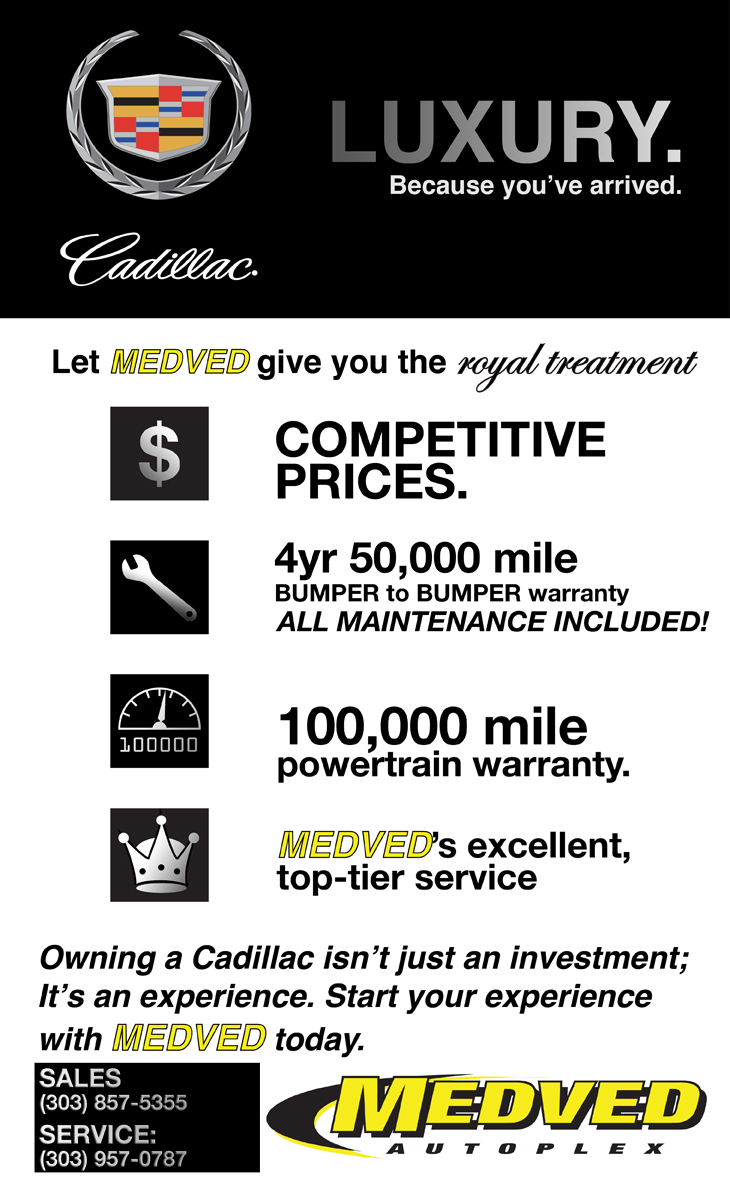
Cadillac retailers base their company on the level of service given on to the consumers because they want to keep their customers as well as their interest of purchasing vehicles.Cadillac pricing system workaround the consumers budget so paying can be beneficial to them.Cadillac has many retail divisions around the world. Cadillac uses the direct marketing approach because they want their consumers to experience the aspects as well as the comfortability of their vehicles or they can check out the cars via online,catalog,mail,and magazines.Cadillac also sale parts of their franchise to venture capitalists so they both can benefit financially.Cadillac also have a mobile app for any questions,comments or concerns we as consumers have.


Monday, October 10, 2011

Chapter 6:Consumer Decision Making;General Motors Cadilliac

In order for the customers to buy a cadillac,it has to meet their needs and wants. Cadillac automobiles has to meet these requirements and add features of the customers liking, in order to be purchased by them. The Cadillac Corporation takes notes of what consumers want nowadays, like electric powered vehicles,maximum safety features,the durability of the vehicle,and how much miles you get on certain automobiles catches the consumers eye. Cadillac also look at the purchases and ratings of vehicles they sold in the past that customers liked and try to add them to the vehicles of today in different varieties. Every consumer had a hint of doubt when it comes to the automobiles of Cadillac,so upon purchasing the vehicle;Cadillac throws in things like 1000$ rebates,fully equipped with safety bags,leather seats, and add in extra miles. Anything that can catch the consumers eye and if they're getting more than what they bargained for,then the consumer will buy the car.Cadillac has employees of all ages or people with different personalities pertaining to the buyer. They have to have their employees trained with aspects of knowing what to say,talk about experiences with the car;just basically persuade the consumer to buy the product but they don't make it known. The Cadillac service representatives talk to consumers on a friendly level of understanding while giving them the piece of mind to buy the great vehicle they are trying to sell.


Monday, October 3, 2011

Chapter 5:Developing a Global Vision;Cadillac

General Motors plan to build Cadillac outside the United States before 2012 as a plan to make GM's  premium brand a global nameplate. Although Cadillac has be sold outside of the United States;like in China and other international markets,it's only being produced in the North America.“We're going to try to define a slightly different brand and product strategy by having a global premium brand, Cadillac, and a global value brand, Chevrolet,” Akerson said, speaking to reporters before GM's first annual shareholders meeting since is IPO last fall.


Cadillac Mining Corp. (CQXFF)  RTx
Last Price0.0978
Change
Day HighN/A
BidN/A
AskN/A
DividendN/A
Last Trade9/28/11
% Change0.00%
Day LowN/A
Bid Size0
AskSize0
Ex-Div DateN/A
TickN/A
OpenN/A
52 Wk Hi0.4959
EPS(TTM)N/A
Shares27,174,828
YieldN/A
Volume
Prev Close0.0978
52 Wk Low0.0885
PE RatioN/A
Market Cap
2.66 m
Exchange
Greys


Read more: http://thestockmarketwatch.com/stock.aspx?stock=CQXFF#ixzz1ZiFrLrzm


The chart above indicates the rates of GM's Cadillac current market.


Tuesday, September 13, 2011

Chapter 4:The Marketing Environment;General Motor's Cadillac

Like all organizations, GM’s Cadillac division must develop products that customers
want, communicate useful information about them, price them appropriately, and
make them available when and where customers may want to buy them. Even if it
does these things well, competition from other automobile marketers, economic conditions, and other factors may affect the company’s success.
http://actionlearning.mit.edu/files/slab_files/Projects/2009/GM,%20report.pdf

Monday, September 5, 2011

Chapter 2:Strategic Planning for Competitive advantage;General Motors

General motors' current strategic plan is called a "Four Point Turnaround Plan" which involves labour expenses being reduced,legacy costs being cut,a decrease in production capacity and new designs and marketing strategies. But as you should know,cost reduction do not guarantee successful competition because other company "ECOcar" could do the same and may get better business. General Motors also must differentiate their products so customers could get a sense of value-added. General Motors must appeal to needs and trends of local markets instead of using global. In order for GM to compete in a global market they have to develop a successful domestic strategy to be able to compete internationally.

General Motors (GM)

GM sold 223,900 units in December 2010, up 7.9 percent compared to December 2009 and up 32.7 percent from November 2010. GM remains the largest automaker in the United States with 2010 total sales a little over 2.2 million vehicles.
Below is GM's model year mix, compared to last year GM is doing an extremely good job of clearing out old inventory and moving to the current model year.
Buick has had the highest percentage gain for any major brand within the U.S. market, model level sales breakdown is below.
General Motors 2010 Calendar Year Sales Up 21 Percent;
December Sales Increase 16 Percent — Best Month of 2010

Thursday, September 1, 2011

The Mission Statement,History and Heritage of General Motors.

G.M. is a multinational corporation engaged in socially responsible operations, worldwide. It is dedicated to provide products and services of such quality that our customers will receive superior value while our employees and business partners will share in our success and our stock-holders will receive a sustained superior return on their investment.


Creation: 1897-1909

At the turn of the 20th century there were fewer than 8,000 automobiles in America, many of them powered by steam or electricity, others had gasoline engines. An unexpected turnout at the first New York Auto Show in 1900, showed the magnitude of the public’s fascination with the automobile. Over the next few years, hundreds of fledgling companies would try to meet the demands of a growing market.
General Motors was founded by William “Billy” Durant on September 16, 1908. Durant had become a leading manufacturer of horse-drawn vehicles in Flint, MI before making his foray into the automobile industry. At its inception GM held only the Buick Motor Company, but in a matter of years would acquire more than 20 companies including Oldsmobile, Cadillac, and Oakland, today known as Pontiac.
In Germany, a company named Opel began by manufacturing dependable sewing machines. Opel became a brand recognized worldwide after adding bicycles to their product arsenal. In 1899, Opel entered the growing automobile market with the Opel-Patent-Motorwagen System Lutzmann and became a part of General Motors thirty years later.

Acceleration: 1910-1929

Earlier inventions such as the electric light bulb, the telephone, and the radio marked a new era of possibilities. In particular, the automobile sent the imagination racing and expanded the horizon upon which people could dream. As demand for automobiles grew to unexpected heights in the 1920s, General Motors set the pace of production, design, and marketing innovation for others to follow.
Adding Chevrolet, Vauxhall and Opel, diversified the selection and added to the reach of GM. With the philosophy and strategy of “a car for every purse and purpose,” and a series of landmark innovations that changed the automobile itself, GM’s vehicles went beyond transportation, becoming statements and aspirations in their own right. During these years GM also opened more than a dozen new plants outside the United States.
The milestone 1927 Cadillac LaSalle, with curves rather than sharp corners and a long, low stance, made people see cars as far more than just a mode of transport. Designed by Harley Earl, the LaSalle was a world apart from the high and boxy Ford Model T, marking the beginning of true automotive design. Earl would head GM’s design studio until his retirement in 1959.

Emotion: 1930-1959

Hard times in America and political change in Europe throughout the 30s brought new uncertainty, but GM’s commitment to innovation continued unabated. The return of peace following World War II brought a new optimism with consumers eager for goods that had been out of reach for so long. GM responded with an unprecedented string of milestone designs that continue to inspire to this day.
In addition to innovations like independent front wheel suspension unibody construction, and the one-piece steel roof, General Motors pushed the envelope in design with a succession of vehicles including the 1949 Buick Roadmaster, theChevrolet Corvetter and BelAir, and the 1959 Cadillac El Dorado. These machines were as much fun to drive as they were to see drive by.
During the war GM supplied the Allies with more goods than any other company. In 1940, former GM President William Knudsen was chosen by President Roosevelt as Chairman of the new Wartime Office of Production Management. By 1942, one hundred percent of GM’s production was in support of the Allied war effort. GM delivered more than $12 billion worth of materials including airplanes, trucks and tanks.

Revolution: 1960-1979

The 60s and 70s were a time of new challenges and great change. Environmental concerns, increased as prices and foreign competition led to an unprecedented downsizing of vehicles across all GM vehicle lines. It was the largest reengineering program ever undertaken in the industry, ushering in an age of lighter, aerodynamic and more fuel-efficient vehicles.

In 1971, GM pioneered the use of engines that could run on low-lead or unleaded gasoline. Two years later, General Motors was the first to offer an air bag in a production car. In 1974, GM introduced the most important step in reducing emissions with the catalytic converter. This technology, shared by General Motors, is still used by the entire auto industry.

There were storm clouds on the horizon, however.  Germany and Japan, now recovered from the devastation of World War II, began exporting cars to the U.S. in larger numbers, and fuel price shocks sparked consumer interest in these new, more fuel-efficient vehicles.  GM rushed to develop smaller vehicles as well, but the company had been too large and too successful for too long to change direction easily, and GM’s undisputed dominance of the U.S. 

Globalization 1980-1999

Although General Motors was always active internationally, the 1980s and 1990s brought a new urgency for GM to operate as a single global company, to improve the efficiency of its operations and better compete with global competitors. GM also began a series of reorganizations in North America that led to a single business unit there.
In 1982, GM marked its largest single production expansion outside of North America with the opening of the new complex in Zaragoza, Spain. This facility immediately began building the fuel-efficient Opel Corsa. With joint ventures in China and India plus the additions of Saab and HUMMER to the GM family, the company expanded both the reach and variety of vehicles sold worldwide.
1995 was a big year for GM. Annual vehicle sales outside North America exceeded three million units for the first time. Five million vehicles were sold in the United States that year and GM entered into its first joint venture agreement in China. By the end of the 90s, the foundation for global growth in the new millennium had been set.
During this period, GM also formed NUMMI, a joint-venture with Toyota, and Saturn, a wholly new company focused on creating a new small car and a new way of doing business. Lessons from these and other innovations were spread throughout GM, and the company benefitted from a truck boom that saw millions of American’s adopt SUVs as their family transportation. However, legacy costs from earlier years continued to weigh on the company, and Japanese, German, and Korean competitors pushed into the lead in most passenger car segments.

Innovation & Challenges 2000-2008

By the start of the new millennium, GM had built a strong presence in emerging markets such as China and Brazil, and had largely completed its transformation into a single global company. The creation of GM Daewoo in 2002 gave GM a new organization specializing and engineering and manufacturing smaller cars, proving an important boost to Chevrolet’s growth as a global brand. The design and quality of GM’s new cars improved significantly, but GM found it difficult to regain share from its offshore competitors, and legacy cost from GM’s decades as a larger, less efficient company continued to weigh on financial results.
It was also a period of tremendous innovation at GM. The company continued to push ahead with electric vehicle technology, developing a series of hydrogen powered fuel-cell concept and demonstration vehicles. Then, it January 2007, GM shook the industry with the Chevrolet Volt concept, a vehicle that could drive on battery power for daily commuting, then continue operating with a range extender when the battery charge was depleted. The first production Volts were delivered to customers in December 2010. GM also became an industry leader in flex-fuel vehicles, which can run on either gasoline or E85, and developed a sophisticated two-mode hybrid system to significantly extend the economy of full-size trucks and SUVs.
Notable new models included the Chevrolet Aveo small car, the Chevrolet Equinox crossover, and the Pontiac Solstice and Saturn Sky roadsters. The new Saturn Aura and Chevrolet Malibu put GM back into the thick of the midsize car fight, and the Cadillac CTS began a renaissance at Cadillac that is gaining momentum to this day.
However, in 2008, a major recession and global credit crisis drove car sales to near depression levels and dried up private sources of capital. GM, critically short of operating cash, received a bridge loan from the U.S. Treasury, under the conditions that the company further accelerate a tough restructuring of its us operations that had been underway for several years.

Rebirth: 2009 - Present

General Motors Corporation filed for bankruptcy on June 1, 2009, and a new General Motors Company,which acquired many of the strongest assets of the old company, was created July 10, 2009, with theU.S. Treasury, Canadian governments, and the UAW Retiree Medical Benefit Trust as its major shareholders.
This new GM is smaller, leaner company than its predecessor. It has four brands in the U.S.: Chevrolet, Buick, GMC, and Cadillac. It has a more focused network of 4,500 dealers and competitive labor agreements with its unions. Globally, GM continues to grow rapidly, and more than 70 percent of its sales now come from outside the U.S. GM’s top five markets by sales are now China, the United States, Brazil, the United Kingdom, and Germany.
Re-emerging at the new GM is the competitive spirit that, for decades, drove GM to leadership in styling, technology, engineering, marketing, and other key areas of theauto business. This spirit guides the new GM as it works to design, build, and sell the world’s best vehicles.